On American Banker: CFPB Needs a Rule to Regulate Debt Collection

By on June 10th, 2016 in Compliance, Industry Insights
CFPB

Debt collection is a regulated industry, but as our thought piece on American Banker states, there’s room for more – positive – guidance.

In the last few years, collection suit numbers have soared and the CFPB has responded by closing or fining what they call “lawsuit mills.”

Still, most collection agencies follow the law and will still find a technological way to file large volumes of lawsuits without violating federal measures. Consumers will still end up losing by being subjected to aggressive yet absolutely legal tactics in the collection process.

Read more here.

Two approaches (and a third) to automating the debt collection process

By on June 7th, 2016 in Industry Insights, Machine Learning
Two approaches (and a third) to automating the debt collection process

Debt collection and account receivable departments often start with one person contacting late customers and evolve from there. Even third party collection agencies grow this way as they get more business. As a result, most collection departments are comprised of large teams of operators trying to negotiate with customers. Data science teams that are tasked with improving performance and profitability usually approach the task in one of two ways: process automation or agent-independent decision automation.

Process Automation is the effort to automate manual tasks done by collection agents, replacing them with an automated process or a self-service portal. This may mean skip tracing, logging payments, or queuing up phone numbers to call. The data science team acquires data sources or builds a process that replaces manual work with automated one, reducing the amount of time an agent spends per case. It’s about optimizing agent time on the phone, making sure that every action an agent takes is a high yield one, while busy work is replaced by some level of automation.

Decision automation means trying to teach a machine how to make the same quality of decision an agent makes in the collection process. For example: how to talk to debtors, what to tell them, how to respond to their issues. Because most agents have a hard time explaining in detail why they made one decision and not the other (they “just know”), often data science teams treat agents as an unreliable source of information. The team determines what they are trying to optimize – for example, right-party contact or the number of calls ending with a payment. They then build models that optimize these metrics, but without asking agents for feedback – only looking at long-term liquidation results.

While both approaches are important and are often used at TrueAccord as well, there’s a third one that often gets overlooked because data scientists and agents don’t interact often: Agent Dependent Decision Automation, or Expert Based Automation.

Interested to learn more? Pick up our free eBook: Automating Debt Collection 101
How can computers collect better than humans?

By on May 3rd, 2016 in Industry Insights, Machine Learning
TrueAccord Blog

When we started working on our patented collection engine, Heartbeat, the industry told us: you’ll fail. Computers can’t collect. Humans do. The best you can do with automated communications is to drive inbound calls, so human collectors can “seal the deal”. Fast forward 18 months since our launch, and Heartbeat beats call-center based agencies in a growing number of segments.  It turns out that computers collect debt pretty well. How come?

Debt collection is a numbers’ game. Consumers are ready and able to pay at different times, react to different stimuli, and need varying levels of support in the process. Teaching a machine to respond to these needs was historically more expensive than hiring humans, but as technology improves and compliance requirements grow, this is changing rapidly.

Humans are great at acting on intuition and responding to a changing situation. We act well based on partial information, guesses, slight changes in tone of voice and intonation. Good sales people do so without thinking. Humans are great at identifying and understanding corner cases and responding to complex inquiries. Machines can’t learn these things unless explicitly taught, and many of these skills are nuanced and complicated. Machines are “robotic”, for better and worse, and can’t have empathy.

Humans do have downsides, too. We are susceptible to biases. We make decisions based on the few past examples we remember and ones that fit what we believe. Collectors fixate on high balance accounts, worry about missing their goals, fight with their significant other and lose focus. Machines do not. Machines don’t forget a thing, and they always take as much data as available into consideration. Machines don’t talk back or get angry.

Historical attempts failed because they either tried to replace humans with even lower-paid humans, or tried to automate and get rid of humans altogether. We realized that a hybrid approach was the best one: machines make accurate decisions based on historical data when available, and learn from humans when not. Humans understand corner cases. We had to create a combination of a strong engine, and a team of experts to continuously improve it.

How does that work? When Hearbeat doesn’t “know’ what to do with a customer, it defers to our team of experts in San Francisco. They resolve the issue for the customer, and also give enough input so Heartbeat will know how to deal with the same situation in the future. The combination allows us to hit incredible productivity rates, while beating other “robotic” and passive “payment gateway” solutions.

Can machines collect? They can, and apparently many who are in debt prefer their targeted approach. When you think about the user experience, the ease of use and the automation, it’s actually not that surprising.

PWC Report: FinTech is shaping FS from the outside in

By on March 22nd, 2016 in Industry Insights
fintech

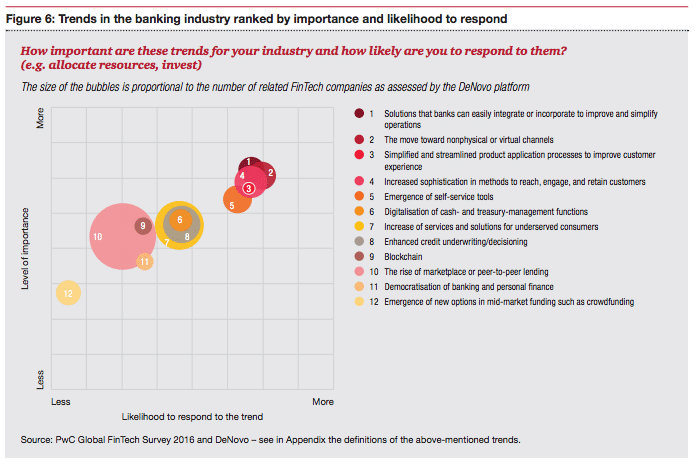
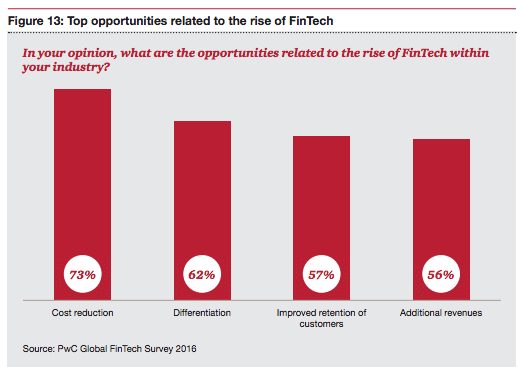
PWC just posted an interesting research (PDF) showing how Fintech firms influence financial institution from the outside in. We especially liked these two graphs:

More virtual channels, simpler products

Screen Shot 2016-03-21 at 11.10.41 AM

“Banks are moving towards non-physical channels by implementing operational solutions and developing new methods to reach, engage and retain customers.” says PWC. We couldn’t agree more: the time for digitization has come, in debt collection as much as in any other part of the business (read more about eDisputes). As a result, banks are listening: “As they pursue a renewed digital customer experience, many are engaging in FinTech to provide customer experiences on a par with large tech companies and innovative start-ups.”

Top Fintech opportunities: cost reduction and differentiation

Screen Shot 2016-03-21 at 11.16.28 AM

“B2B FinTech companies create real opportunities for incumbents to improve their traditional offerings”, says PWC, “incumbents could simplify and rationalise their core processes, services and products, and consequently reduce inefficiencies in their operations.” We see that in the marketplace: technology and automation help us scale (read more about 30,000 cases per agent) but it also helps us provide personalized, tailored treatment to consumers. As a result, lenders that work with us see better results (through complex recovery strategies), better customer satisfaction, and increased compliance.

Bottom line

Banks are leaders of the Fintech community. Often they are reluctant to adopt a trend until it visibly gains traction, but once they do, their scale draws attention from all participants. It’s 2016, and banks have noticed Fintech and the upside it brings with it. It’s going to be a fascinating year!

Free eBook: Boosting your Collection Strategy with Digital Collections

By on February 10th, 2016 in Industry Insights, Machine Learning
TrueAccord Blog

Tasked with creating a collection strategy? Fighting to reinvent your collection funnel or turn around a failing operation? It’s time to harness technology to get ahead. 21st century technology has arrived, and digital collections are here for you.

This 28 page book includes:

  • Collection strategy 101: for the uninitiated – learn the basics
  • The pitfalls in common collection strategies – how legacy forces constraints
  • Using technology to get superior results – how machine learning and digital collections can help you blog through your goals

Learn from our experience working with dozens of companies from various segments and different stages, and with hundreds of thousands of customers in debt. Download the free eBook here.

Already interested in digital collection and how they can enhance your strategy? Worried about upcoming changes in debt collection rules and how you’d adapt to them? You’ve come to the right place. Check out our website and talk to our experts about what we could do for you.

Debt Collection and the CFPB

By on January 14th, 2016 in Compliance, Industry Insights
CFPB

Are you a member of the California Bar, or just interested in ethics in debt collection? Join and hear a talk by our General Counsel, Avital Gertner-Samet.

Date and Time: January 21, 2016, 11:45 a.m. to 1:00 p.m.

Committee secretary Avital Samet, General Counsel at TrueAccord, will lead the presentation covering potential ethical conflicts to be aware of and avoid while practicing debt collection law. The attorney’s loyalty and confidentiality duties to his client will be juxtaposed against the attorney’s duty as an officer of the court and duties owed to the consumer. These aspects are relevant both to third party and first party debt collectors as well as to counsels that advise to creditors and consumers alike.  She will be joined by Matt Loker (Kazerouni Law Group, APC) and Jeffrey Ehrlich (Consumer Financial Protection Bureau). 

To attend, please use the following dial-in number at 11:45 a.m.

Dial-in: (855) 520-7605

Passcode: 908 506 2381

The dispute process isn’t working for consumers – this is how we solve it

By on December 21st, 2015 in Compliance, Industry Insights
pablo 3

TrueAccord has been refining the debt dispute process since our inception in 2013. Offering digital disputes streamlines the conversation between consumers and collectors while also reducing compliance risk. Engagement of consumers in debt-related discussions have decreased complaints quickly leading conversations into debt resolution.

Read the excerpt and download the whitepaper for free.

Consumers who owe debts are often confused, angry and scared – sometimes unaware of the full details of what they owe and to whom. Though the FDCPA was written to protect the average American consumer, aspects of it, including the mini Miranda and debt validation notice are written in formal legalese. As a result, consumers filing a formal debt dispute tend to skip over reading the information or misunderstand the language, leading them to miss remedies immediately available to them. For example, consumers often miss the allotted 30-day dispute window after the initial communication, during which time they can dispute the debt, while asking for additional verification.

Top Three Reasons Lenders Shouldn’t Use Debt Sales (and Two Reasons They Should)

By on December 14th, 2015 in Industry Insights
pablo4copy

The online lending space is experiencing tremendous interest, leading to explosive growth and an influx of capital. Many companies grow overnight, raise big rounds of venture capital; vying for a piece of an increasingly competitive market. While top-line growth and customer acquisitions are top of mind for new and existing players, the increase of competition puts a lot of pressure on margins. When focus moves to profitability and unit economics, reducing defaults has a significant impact. After optimizing underwriting criteria, many lenders turn to optimizing collection and recovery strategy.

Now, there is a limited set of tools available to collection strategists, especially considering it’s a service that’s been around for millennia. Traditionally, companies collect in-house, outsource to an agency, sue debtors, or sell their debt (or any combination of the above). Are these tools efficient? Which ones are best? And specifically – should new lenders sell their debt?

Continue reading “Top Three Reasons Lenders Shouldn’t Use Debt Sales (and Two Reasons They Should)”