If you need to file for bankruptcy as your only option, we’re sorry to hear that. It’s never fun to be at a point where this is your only option. This is also a confusing time – not only are you in a tough financial spot, there’s also a lot to learn and decide on. Here, we tried to put together a few resources to help you choose and understand the process better.
We are nearing the end of the sales pitch, and the exec I’m speaking to is almost convinced. I feel it: he likes the product and likes the innovation but he has to ask; he can’t let me off the hook.
He leans forward and looks me right in the eyes. And then it comes. The question.
“Tell me more about your Compliance Management System.”
Without a word, I reach into my bag, and grab a folder. It’s massive with hundreds of pages, all properly categorized: FDCPA, TCPA, FCRA, ECOA, GLBA, you-name-it. Here are the results of hundreds, maybe thousands of work hours. I slap it on the table, and it makes a loud noise even in this cavernous conference room.
In my past life, working for large corporations, everyone around me had a well-defined role. There was a team in charge of the strategy, a team responsible for analytics, different set of folks who took the analysis and translated it into policy, then someone who took that and designed a product solution and wrote out a spec, a project manager that helped coordinate and, of course, the engineering team. I may have missed someone – but you get the sense. Every six months or so, the division I was in would go through a reorg – to centralize, or to regionalize, or to better define the role of one of the teams above, or to split it into two, etc. What drove the reorgs was rarely a change in company direction – more often than not, it was the overlap in the roles of multiple teams, or unhappiness by a subset of people about not being recognized, or being pigeonholed into a piece of the landscape that wasn’t attractive.
Now that I am part of the leadership team at TrueAccord, we’ve had some conversations about the best way to split the end-to-end responsibility of building and operating a technology platform between teams of people. As I ponder this topic more and more, I am becoming convinced that there is tremendous value in keeping roles broad and multifaceted – particularly in teams where employees’ average level of work experience is less than 10 years per employee.
Are all debt collectors bad people? Far from it. Still, newspapers are filled with colorful, hard to read descriptions like this one. As we’ve written before, the barriers to entry into the debt collection market is too low, and enforcement is limited enough to draw people who skirt the law for profit.
Debt collection can be different – friendly, targeted, frictionless and focused on financial rehabilitation. That’s our vision!
April has been a busy week for us! The TrueAccord team spent time at LendIt NYC, and was covered in Credit.com (including testimonials from actual collection processes!), Money For Lunch and NerdWallet. We’re proud of the interest we’re getting from various publications in financial services – the debt collection revolution is starting to pick up.
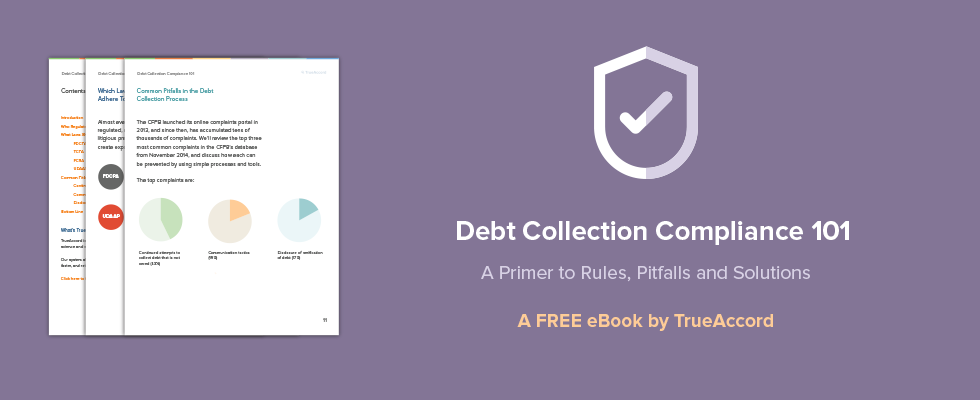
Debt collections is a litigious market. Whether debt collectors sue debtors for payment, or the cottage industry of consumer advocates that evolved to sue for every technical violation, you’re bound to get your day in court. Couple that with a strong Federal regulator and public scrutiny, and it’s obvious why you need to learn more about regulation and how to adhere to it.
If you’re just starting to learn about debt collection, this free eBook will give you a first taste:
Learn who regulates debt collectors
Get an introduction to the relevant Federal rules
Learn about the top complaints debt collectors face, and how to prevent them
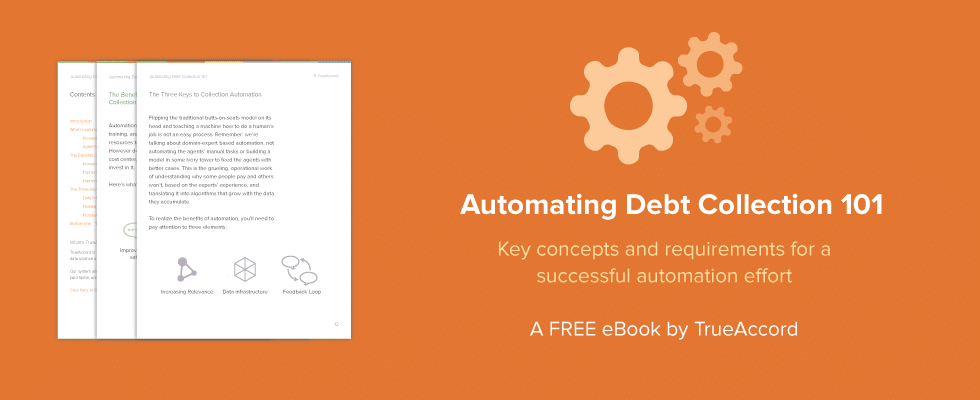
TrueAccord was built as an automated system from day one. Customer care experts handle the cases that needed special care, and teach the machine how to improve. We learned how to do that through a lot of hard work and testing, and we’d like to share some of that with you. In this free eBook, you’ll:
Learn about the different types of automation
Read from TrueAccord’s experience about the benefits of automation
Read about the three keys to a successful automation project
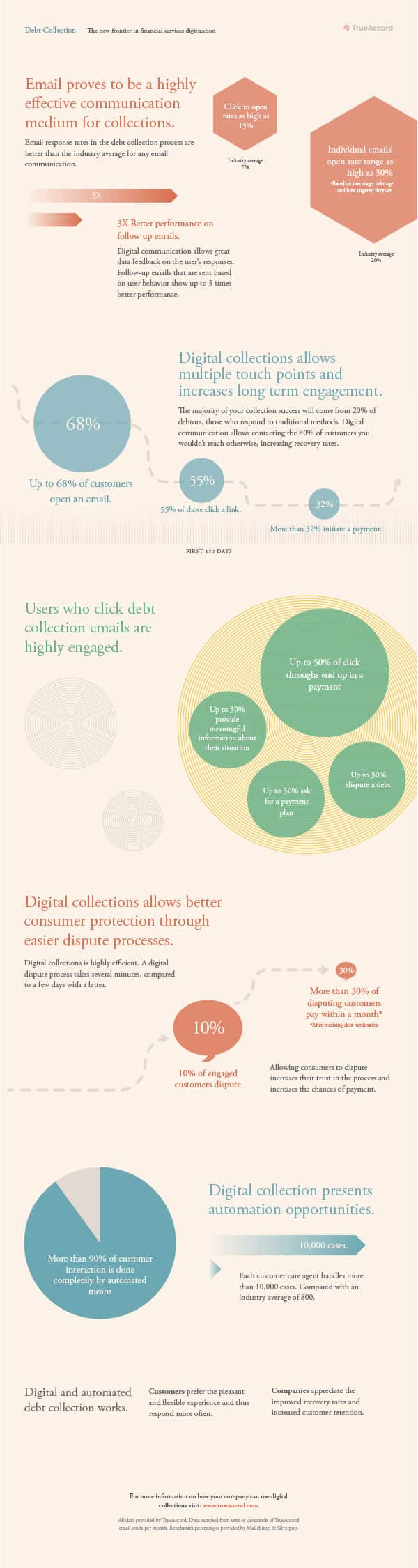
Ever wonder what the numbers really look like for digital debt collection? As it turns out, pretty good. Our design team released this infographic showing how our system is performing across different dimensions. Happy reading!
Getting a debtor on the line, or to respond to an email, is a hard task. Customers don’t end up in this point if they have money and intend to pay promptly. Therefore, once you do talk to them, it’s important to use that time in the best way possible. There are three things to pay attention to when interacting with a debtor:
Instill a sense of urgency
Get the truth
Counter the excuse
Instilling A Sense Of Urgency
If your approach to getting paid is laid back and non-committal, your debtor will take this approach as well. When you communicate with late customers, you must demonstrate that the issue is urgent and important in order to get their attention and move them to action.
Getting The Truth
Sometimes the truth sounds like an excuse. Your debtors might be in real trouble or they might be tricking you. Asking the right questions will help you determine the facts and act accordingly.
Countering The Excuse
Once you’ve established you are hearing an excuse, you need to counter it in a way that makes sure you won’t need to deal with it again for this debtor.
Did you find this helpful? Download our free eBook “The Top 4 Excuses Debtors Make” and learn more about how to counter common excuses.
TrueAccord is a machine-learning and Al-driven 3rd-party debt collection company that is reinventing debt collection. We make debt collection empathetic and customer-focused and deliver a great user experience.
Our digital-first approach to debt collection creates a cycle of collections growth:
1. Improve the perception of the industry
2. Provide a personalized experience
3. Build brand equity and collect